- Home
- About Us
- EMR Features
-
-
- EMR Features
-
- Patient Health Features
-
- Clinic Features
-
-
- Specialties
-
- Blog
- Contact Us
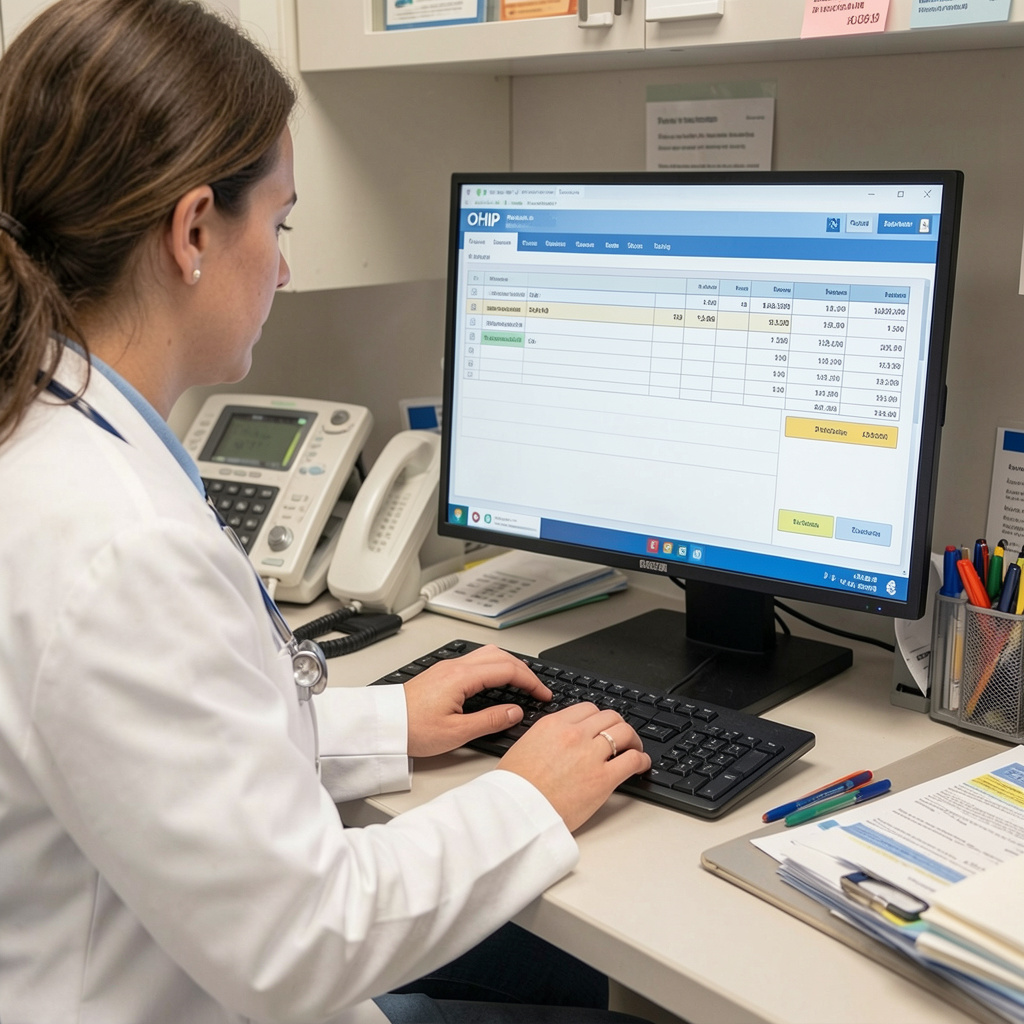
OHIP in Ontario forms the foundation of how clinics manage reimbursements for insured healthcare services. Every patient interaction must be translated into accurate billing codes and submitted in compliance with provincial guidelines. As clinics grow, this process becomes more layered, making scalability a critical part of operational success.
A billing workflow that works for a smaller practice often struggles under higher patient volumes and expanded services. OHIP billing must evolve alongside clinic operations to maintain consistency, reduce delays, and ensure predictable revenue cycles. Without a structured and scalable approach, even well-run clinics can face inefficiencies that impact financial performance.
A scalable OHIP billing process includes standardized workflows, automated validation, real-time tracking, and integration with clinical documentation to efficiently handle increasing claim volumes.
Clinics can reduce delays by using structured billing systems, validating claims before submission, improving documentation accuracy, and tracking claim status in real time.
Scalability in billing ensures that processes remain stable even as complexity increases. Growth brings more providers, diverse visit types, and higher claim volumes. Each of these adds pressure to the billing workflow.
When OHIP billing processes are not designed for scale, small inefficiencies multiply. Minor coding errors, inconsistent documentation, and delayed submissions can lead to increased rejections and longer payment cycles. Over time, this affects both operational efficiency and financial predictability.
A scalable system allows clinics to handle growth without constantly reworking internal processes. It ensures that billing remains accurate and consistent regardless of patient load or staffing changes.
A scalable billing process is built on three key elements: consistency, automation, and visibility.
Consistency ensures that every claim follows the same structured workflow. This reduces variability between staff members and improves overall accuracy. Standardized processes also make it easier to train new team members as the clinic expands.
Automation reduces manual effort by validating claims before submission. It helps ensure that service codes, provider details, and documentation align with OHIP requirements. This minimizes errors and reduces the need for resubmissions.
Visibility provides real-time insight into claim status, outstanding submissions, and error patterns. Clinics can quickly identify bottlenecks and address issues before they impact the revenue cycle.
When these elements are in place, OHIP billing becomes more predictable and easier to manage at scale.
Manual billing systems often create hidden challenges that become more visible as clinics grow. Data entry errors, inconsistent coding, and fragmented documentation slow down the submission process and increase the likelihood of rejections.
As patient volumes increase, staff may spend more time correcting errors than processing new claims. This reduces productivity and creates delays in reimbursement.
Manual tracking also limits transparency. Clinics may not have clear visibility into where claims are delayed or why certain submissions fail. Without this insight, improving the billing process becomes difficult.
Over time, reliance on manual OHIP billing can restrict a clinics ability to scale efficiently. Administrative workload increases, and financial performance becomes less predictable.
Billing software introduces structure and efficiency into the billing process. It automates validation, ensuring that claims meet OHIP requirements before submission. This significantly reduces errors and improves acceptance rates.
Integration with clinical documentation is another key advantage. When billing workflows are connected to patient records, claims are supported by accurate and complete information. This alignment reduces discrepancies and improves workflow efficiency.
Real-time tracking capabilities allow clinics to monitor claim status and quickly identify issues. This enables faster corrections and minimizes reimbursement delays.
As clinics expand, billing software supports higher claim volumes without compromising accuracy. It standardizes workflows across staff and ensures consistent performance even during peak periods.
Also read: What Is OHIP Billing Software and Why Do Ontario Clinics Need It?
As clinics scale, several areas require close attention to maintain billing efficiency.
Workflow consistency is essential. All staff members must follow standardized processes to ensure accuracy and reduce variability.
System integration plays a major role. Billing workflows should align with clinical documentation to avoid duplication and ensure that every claim is supported by accurate records.
Reporting capabilities are also important. Clinics need access to clear data on claim performance, rejection rates, and payment timelines. This helps identify trends and supports continuous improvement.
Flexibility is another critical factor. As clinics introduce new services or expand teams, the billing process must adapt without requiring major operational changes.
Evaluating these areas helps clinics build a billing process that supports both current operations and future growth.
A scalable billing process requires ongoing refinement. Clinics must focus on reducing variability, improving accuracy, and maintaining visibility across all billing activities.
Structured workflows ensure that every claim follows a consistent path from documentation to submission. This reduces errors and improves efficiency.
Technology plays a central role in supporting this structure. By integrating billing with clinical workflows, clinics can streamline operations and reduce administrative burden.
Long-term performance depends on the ability to handle increasing complexity without compromising accuracy. Clinics that invest in scalable OHIP billing processes are better positioned to maintain stability and support growth.
Growth introduces both opportunity and complexity. A scalable billing process ensures that clinics can manage increasing demand while maintaining accuracy and efficiency.
Alembico EMR provides a unified platform that connects clinical documentation with billing workflows, helping clinics maintain consistency and control. By reducing errors and improving visibility, it supports a more reliable revenue cycle for Ontario practices.
Connect with Alembico EMR today to implement OHIP billing software that supports long-term clinic growth.
Tags: Ohip Billing Software, OHIP in Ontario, OHIP medical billing