- Home
- About Us
- EMR Features
-
-
- EMR Features
-
- Patient Health Features
-
- Clinic Features
-
-
- Specialties
-
- Blog
- Contact Us
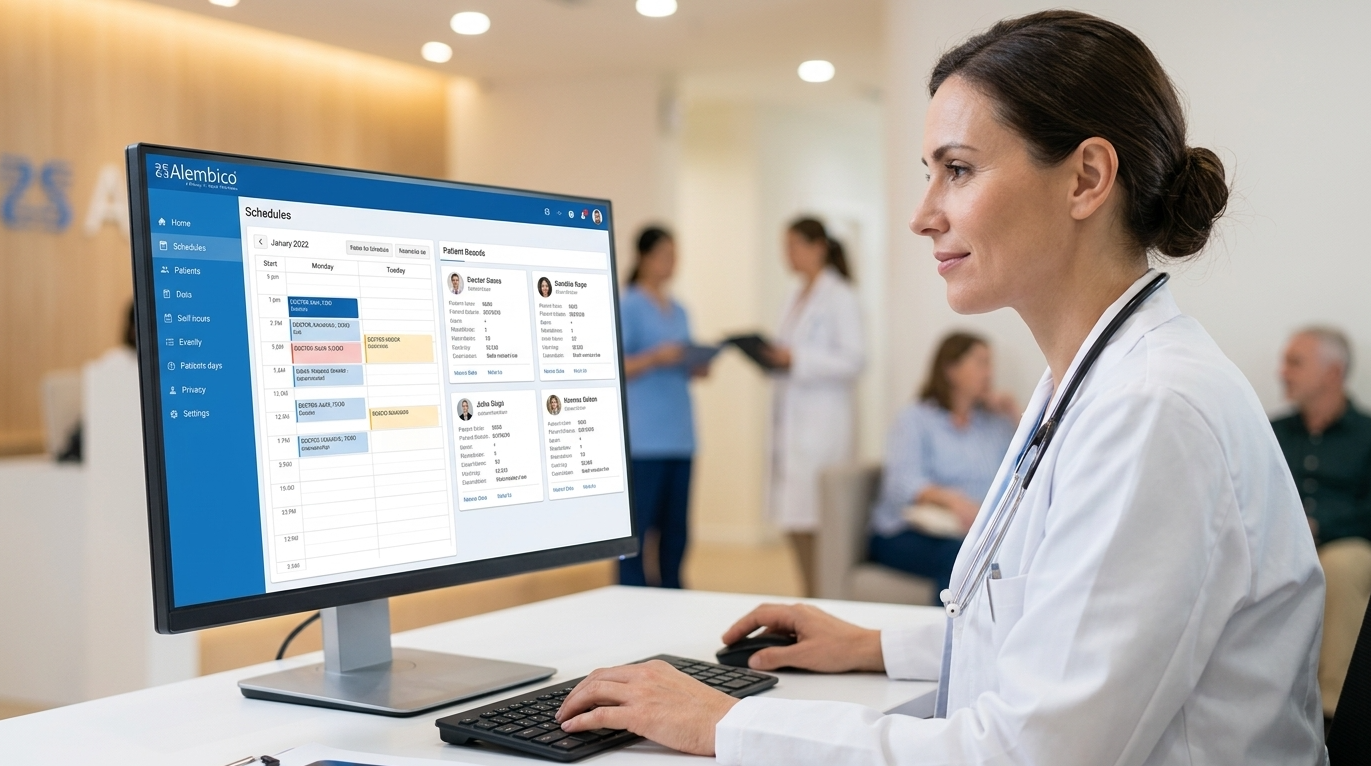
Doctors need an EMR that works around their clinical workflow, not one that makes everyday tasks more complicated. A doctor friendly EMR should make it easier to access patient information, document visits, manage appointments, communicate with patients, and complete administrative tasks without unnecessary steps.
For Ontario clinics, choosing the right EMR software in Ontario can make a significant difference in how efficiently providers manage their daily responsibilities.
A doctor friendly EMR should be intuitive, easy to navigate, and designed around the way healthcare providers actually work.
Instead of requiring providers to move between multiple systems, a modern medical EMR system can bring important clinical and administrative workflows together in one platform.
Key characteristics include:
The goal is simple: help providers spend less time managing the system and more time caring for patients.
Doctors often need to review a patient’s history before making clinical decisions. Searching through disconnected systems or paper records can slow down the workflow.
A well-designed EMR provides quick access to relevant patient information, including:
Having information organized in one place helps providers move through patient encounters more efficiently.
Documentation is one of the most time-consuming parts of a provider’s day.
A doctor friendly EMR should make documentation straightforward through features such as customizable templates, digital forms, structured notes, and AI-supported documentation.
Instead of spending unnecessary time navigating complex screens, providers can document encounters using workflows that fit their practice.
For modern EMR systems in Ontario, efficient documentation is particularly important as clinics look for ways to reduce administrative workload.
Scheduling should not exist separately from the patient record.
With integrated scheduling, providers and staff can access appointment information alongside patient records. This helps clinics manage:
Connecting scheduling with the rest of the EMR can reduce duplicate data entry and make daily workflows easier to manage.
Billing is another area where a doctor friendly EMR can reduce administrative complexity.
When OHIP billing software is integrated with the EMR, relevant information can move through the billing workflow without requiring staff to rely on disconnected systems.
For Ontario providers, an integrated platform can bring clinical documentation, patient information, and billing workflows together.
This can help reduce repetitive administrative work while making billing activities easier to manage.
Prescription management should be accessible without forcing providers to leave the patient workflow.
An effective EMR can make it easier to review medication information, manage prescriptions, and maintain an organized patient record.
Having these capabilities within the same platform can help providers complete routine tasks more efficiently.
Referrals can involve multiple steps, from creating the referral to tracking its progress and managing incoming information.
A doctor friendly EMR should support both incoming and outgoing referrals, allowing clinics to keep referral information organized within the patient’s record.
This can improve continuity of care and reduce the need to manage referral information across separate systems.
Communication is an important part of modern clinical workflows.
Integrated messaging can help providers and clinic staff communicate securely without relying on disconnected communication tools.
A centralized approach can make it easier to keep relevant communication associated with the appropriate patient and workflow.
Reporting should help providers and clinic managers understand what is happening across the practice, not create additional administrative work.
A modern EMR can provide reporting capabilities for areas such as:
Useful reporting allows clinics to identify trends and make more informed decisions about their workflows.
A cloud-based EMR software can provide authorized users with secure access to clinical information without being tied to a specific computer or location.
For clinics with multiple providers or locations, this can make collaboration and information access more convenient.
Cloud-based systems can also reduce the need for clinics to manage complex on-site infrastructure.
Perhaps the most important characteristic of a doctor friendly EMR is usability.
An EMR should support the provider’s workflow rather than force providers to adapt their clinical processes around complicated software.
When scheduling, documentation, billing, prescriptions, referrals, messaging, and patient records are connected, providers can complete more tasks within a single workflow.
This is especially important when evaluating an EMR in Ontario, where clinics may have specific billing, documentation, and administrative requirements.
When comparing EMR software Ontario options, clinics should look beyond the number of features offered.
Consider:
The best system isn’t necessarily the one with the longest feature list. It is the one that helps providers complete their everyday work more efficiently and with fewer unnecessary steps.
Alembico EMR is an OntarioMD Certified EMR designed for the workflows of Ontario healthcare providers.
The platform brings together patient records, scheduling, OHIP billing, documentation, prescriptions, referrals, messaging, reporting, preventive care, chronic disease management, digital forms, and AI-powered documentation in one secure cloud-based system.
For clinics looking for a doctor friendly EMR that connects clinical and administrative workflows, Alembico provides an integrated platform designed to make everyday practice management simpler.
Tags: Clinic Management Software, EMR Software in Ontario, EMR systems in Ontario, Ohip Billing Software